

In a world where communication skills can make or break careers, drama education steps onto the stage like a superhero in a cape. It’s not just about learning to recite Shakespeare or mastering the art of dramatic pauses—it’s about building confidence, creativity, and collaboration. Imagine a classroom where students transform into characters, stepping outside their comfort zones while laughing and learning.
Drama education offers a unique blend of fun and personal growth, turning shy wallflowers into charismatic performers. Whether it’s through improv games or scripted performances, students discover their voices and unlock their potential. So, why not let the curtain rise on the benefits of drama education? It might just be the ticket to a brighter future, one scene at a time.
Overview of Drama Education
Drama education serves as a powerful tool for developing crucial life skills. Engaging in drama activities enhances students’ communication abilities, fostering expression and articulation. Students experience personal growth through various exercises, such as improv games, which encourage spontaneous thinking.
Collaboration becomes essential when working in groups, as students learn to respect differing viewpoints and contribute to shared goals. Confidence blossoms within a supportive environment, allowing individuals to confront their fears and take risks. Dramatic performances, whether scripted or unscripted, provide opportunities for self-discovery and audience connection.
Creative thinking is another critical component of drama education. Students develop their imaginations as they create characters and narratives. Problem-solving skills improve through the exploration of complex scenarios in scenes and storylines.
Furthermore, drama education fosters empathy. By stepping into another’s shoes, students gain insight into diverse perspectives and life experiences. This understanding cultivates compassion, making them more adaptable and sensitive individuals.
Lastly, drama education offers an avenue for social interaction. Students build friendships and networks while collaborating on projects, enhancing their overall social skills. Engaging in drama encourages teamwork, ultimately shaping students into well-rounded individuals poised for success.
Importance of Drama Education
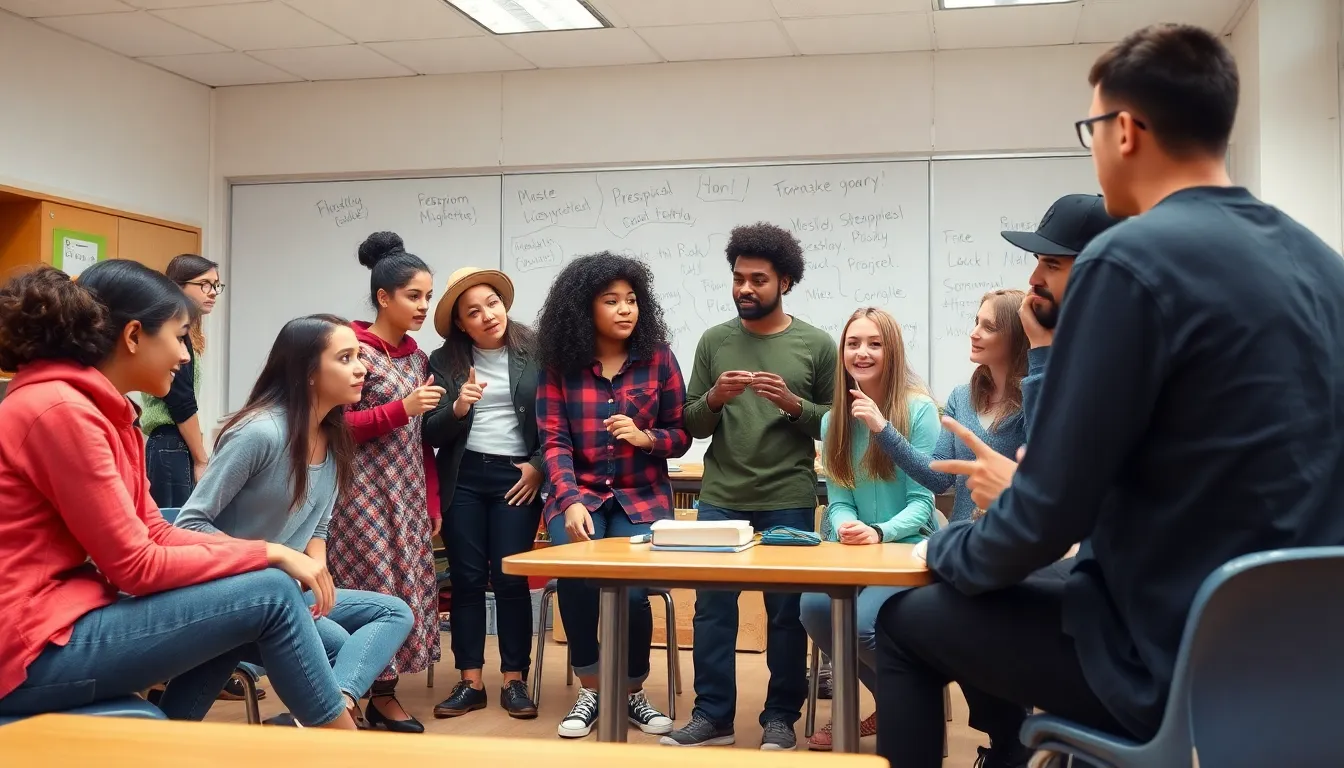
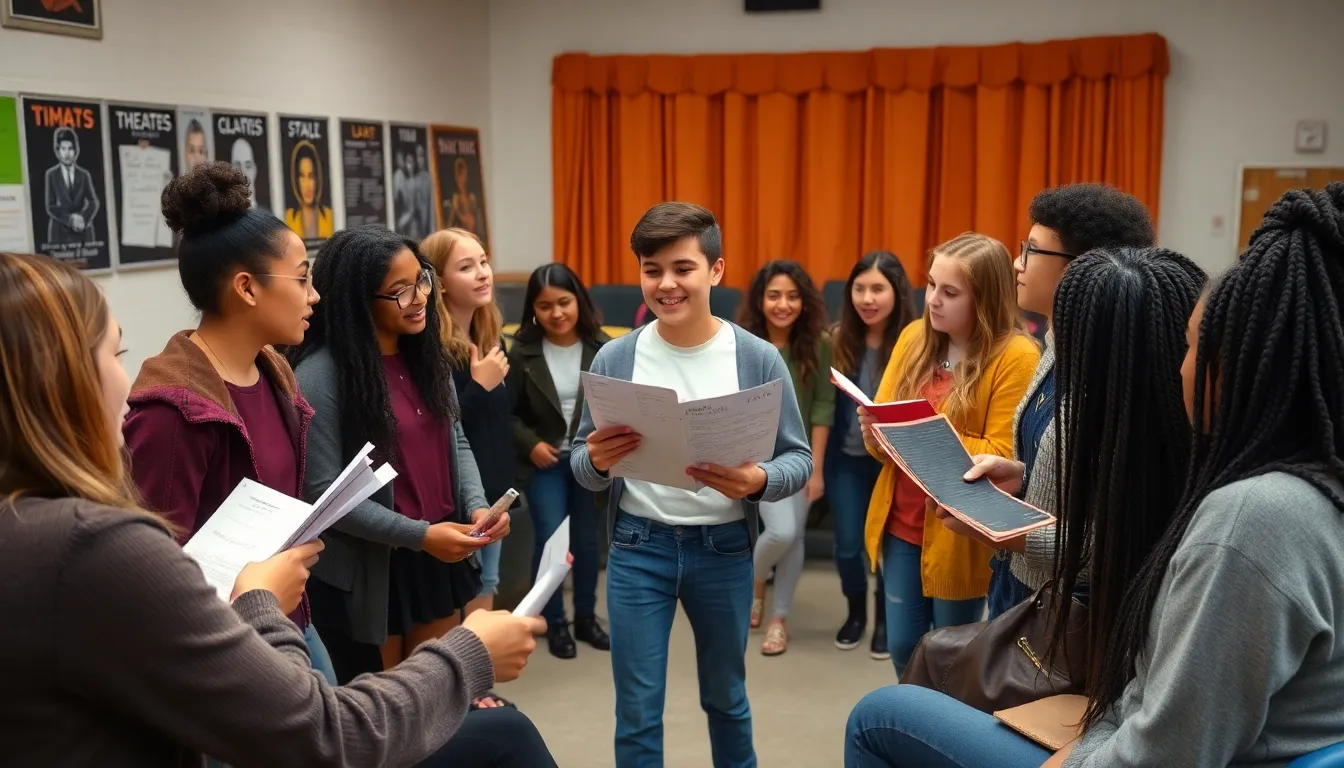
Drama education plays a crucial role in students’ personal and academic development. This discipline not only enhances communication skills but also nurtures essential life skills for future success.
Enhancing Creativity
Engagement in drama activities encourages creative expression. Students immerse themselves in character creation and narrative development, fostering imagination. Exploring different scenarios equips students with problem-solving skills. They learn to think outside the box while working through various challenges. Additionally, collaborative projects spark innovative ideas, allowing for diverse interpretations. Drama education creates a safe environment where experimentation and failure lead to growth. Lastly, creative thinking nurtured through drama serves students well in various fields, extending beyond the classroom.
Building Confidence
Participating in drama cultivates self-assurance among students. By stepping into the spotlight, students confront their fears and insecurities. Performances and improv games develop articulation and presence. Each rehearsal provides constructive feedback, boosting confidence levels. Such activities encourage risk-taking, as students learn to express their thoughts without judgment. They support each other, forming a strong sense of community. Furthermore, dramatic arts teach resilience, as students often face challenges in their performances. Ultimately, building confidence through drama education prepares them for future endeavors.
Teaching Methods in Drama Education
Various teaching methods enhance the effectiveness of drama education. These methods engage students and develop their skills in unique ways.
Immersive Techniques
Immersive techniques involve students actively participating in dramatic scenarios. Techniques like simulation create a realistic environment, allowing students to explore emotions and actions. Engaging in these activities heightens empathy, as students understand perspectives different from their own. Performance-based workshops further foster creativity, enabling students to experiment with characters and narratives. Additionally, interactive storytelling encourages collaboration, as students contribute ideas in a shared narrative progression. Overall, immersion deepens learning experiences and nurtures critical thinking.
Role-Playing Approaches
Role-playing approaches encourage students to step into various characters. This method develops not only acting skills but also enhances critical analysis. By embodying different roles, students confront diverse situations, leading to improved problem-solving. Group exercises in role-playing enhance teamwork and cooperation, as participants learn to navigate interpersonal dynamics. Furthermore, debriefing sessions after role-playing provide essential feedback, strengthening understanding and insight. Constant practice in this method helps build confidence while fostering a deeper connection to dramatic content.
Benefits of Drama Education
Drama education offers numerous benefits that contribute to overall student development. Engagement in drama activities fosters communication skills, confidence, and creativity, equipping students for future success.
Social Skills Development
Students enhance social skills through participation in collaborative projects. They practice teamwork while exploring roles and characters, building rapport with peers in a supportive environment. Sharing ideas encourages respect for differing viewpoints, which nurtures cooperative interactions. Role-playing allows for genuine dialogue, helping students develop active listening abilities. Performing together fosters friendships, as students connect over shared experiences in drama. Ultimately, these activities cultivate essential social skills that extend beyond the classroom.
Emotional Understanding
Drama education significantly improves emotional understanding among students. By stepping into various characters, they gain insight into diverse emotions and perspectives. Engaging in improvisation encourages individuals to express their feelings openly, which nurtures authentic self-expression. Participation in dramatic scenarios helps students navigate complex emotional landscapes, promoting empathy and compassion. Experiencing stories from different vantage points reinforces emotional intelligence, allowing students to articulate feelings effectively. Consequently, these skills support personal growth and interpersonal relationships, essential for navigating real-life situations.
Challenges in Drama Education
Drama education faces several significant challenges that can hinder its effectiveness. Understanding these obstacles helps educators develop strategies to enhance learning experiences.
Lack of Resources
Many schools lack adequate funding for drama programs. Limited budgets restrict access to essential materials such as costumes, props, and stage equipment. This scarcity of resources often results in diminished opportunities for students to participate fully in drama activities. Without proper facilities, performing arts classes struggle to create engaging environments. Moreover, fewer qualified instructors may lead to inadequate guidance for students pursuing drama education. When access to necessary tools is restricted, the overall quality of the program declines, leaving students without valuable experiences.
Curriculum Constraints
Curriculum constraints frequently restrict the integration of drama into educational programs. Standardized testing and academic requirements often prioritize core subjects over arts education. This focus on math and science can limit classroom time for drama activities. Teachers may feel pressured to meet specific learning objectives, neglecting creativity and expressive arts. Consequently, students miss out on the personal growth benefits that drama education offers. In some instances, the lack of dramatic content in lesson plans impacts students’ ability to explore their interests fully. When curricula undervalue drama, creative development suffers, affecting students’ overall educational experience.
Drama education stands as a vital component in shaping well-rounded individuals. It not only fosters essential life skills but also encourages personal growth through creative expression and collaboration. By participating in drama activities, students gain confidence and enhance their communication abilities, preparing them for future challenges.
The transformative power of drama lies in its ability to cultivate empathy and emotional intelligence. As students immerse themselves in diverse characters and narratives, they develop a deeper understanding of various perspectives. This experience enriches their interpersonal relationships and nurtures a supportive community.
Despite the challenges faced in drama education, its benefits are undeniable. Advocating for resources and prioritizing arts education can help ensure that students continue to reap the rewards of this enriching discipline. Embracing drama education is an investment in the future success of students, equipping them with skills that extend far beyond the stage.

