
Art critique isn’t just for pretentious gallery-goers sipping overpriced wine. It’s a vital skill that can transform how one appreciates and interacts with art. Whether it’s a bold abstract piece or a classic landscape, understanding the nuances of critique can elevate anyone’s experience from “I don’t get it” to “Wow, that’s deep!”
Imagine walking into a gallery, confidently discussing brush strokes and color theory like a seasoned pro. Not only will you impress your friends, but you might just uncover layers of meaning that make you see the world—and your Instagram feed—in a whole new light. So grab your beret and let’s dive into the delightful, sometimes hilarious world of art critique. Who knows? You might just discover your inner art critic, complete with witty remarks and an eye for the extraordinary.
Understanding Art Critique
Art critique encompasses evaluating and analyzing artwork to foster appreciation and understanding. This process elevates the viewing experience beyond mere surface impressions.
Definition of Art Critique
Art critique refers to the systematic analysis of an artwork’s elements, such as composition, color, and technique. It serves as a platform for individuals to express interpretations. Engaging in art critique allows an opportunity to discuss the context behind the piece. Skillful critiques explore various perspectives, encouraging open dialogue among participants. Critics frequently emphasize their insights to illuminate deeper meanings, enhancing both personal and communal appreciation of art.
Importance of Art Critique
Art critique plays a crucial role in developing a richer understanding of artistic works. Through critique, individuals cultivate critical thinking skills that apply across various disciplines. Exposure to different viewpoints broadens one’s appreciation for diverse artistic expressions. Constructive feedback helps artists refine their techniques and grow in their practice. Engaging in critique strengthens connections within art communities, fostering collaboration and learning. Moreover, art critique invites individuals to explore and voice their interpretations, illuminating the subjective nature of art.
Elements of Art Critique
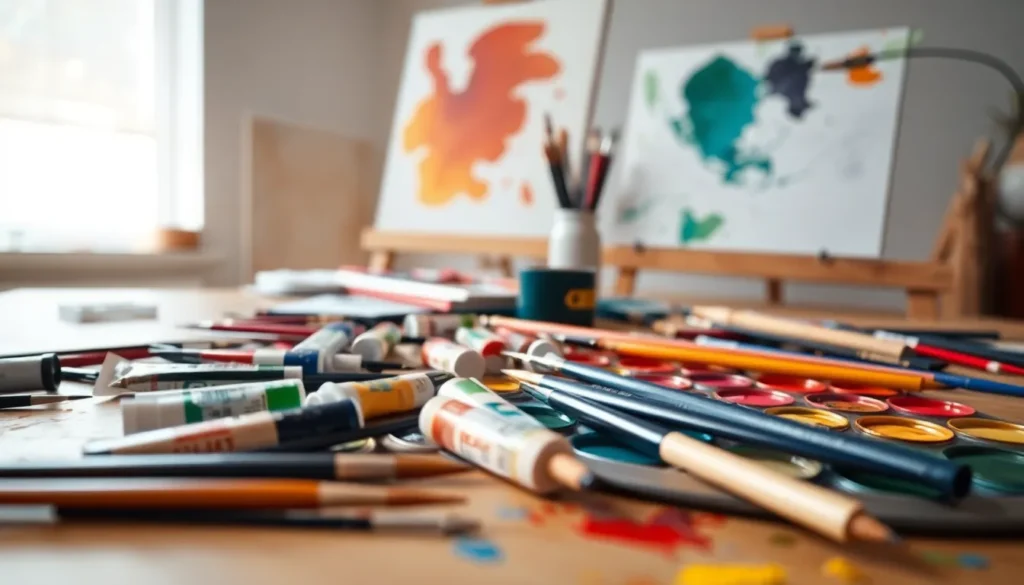
Art critique involves a thorough examination of specific components that contribute to the overall impact of an artwork. Understanding these elements fosters deeper appreciation and enhances critical discussions.
Composition and Design
Composition serves as the framework for a piece, guiding the viewer’s eye and shaping their experience. Balanced arrangements create harmony, while asymmetry can evoke tension. Designers utilize principles like contrast, repetition, and alignment to achieve visual interest. Artists often experiment with focal points to emphasize specific themes or narratives within their work. Such thoughtful arrangements reveal the artist’s intentions and enhance the viewer’s interaction with the piece.
Use of Color
Color plays a significant role in conveying emotions and setting the mood. Each hue elicits distinct feelings, from tranquility associated with blues to energy found in reds. Artists manipulate color theory to create depth and dimension, guiding viewers’ responses. Color combinations, whether complementary or analogous, affect the overall aesthetic. Examining the purpose behind color choices can unveil underlying messages and intentions within the artwork.
Technique and Medium
Technique encompasses the methods used to create art, influencing texture and form. Various mediums, including oil paint, watercolor, or digital tools, offer unique opportunities for expression. Brushwork, layering, and application techniques contribute to the tactile quality of the piece. By analyzing these approaches, observers gain insight into the artist’s skill and artistic expression. Understanding medium and technique strengthens appreciation for the craftsmanship involved.
Different Approaches to Art Critique
Art critique encompasses various approaches that enrich the understanding of artwork. Each method offers unique insights and perspectives.
Formalist Critique
In formalist critique, emphasis lies on analyzing the visual elements of art. Critics focus on composition, color, and form without considering external contexts. The technique prioritizes structure and aesthetics. By examining lines, shapes, and texture, one can discover how these elements interact. Artists use formalist critique to refine their craft, ensuring that each component serves a purpose. This approach encourages a deeper appreciation for artistry, revealing layers of complexity in seemingly simple pieces.
Contextual Critique
Contextual critique delves deeper, exploring the cultural and historical background of an artwork. Critics investigate how societal influences shape artistic expression. This method prioritizes understanding the artist’s intentions and the work’s significance within its environment. By analyzing relevant events and ideals, individuals can grasp the artwork’s broader implications. Contextual critique enhances conversations about art, connecting it to ongoing dialogues in society. Artists benefit from this approach as it helps viewers find relevance and meaning beyond aesthetics.
Subjective Critique
Subjective critique focuses on personal interpretations and emotional responses to artwork. Critics share individual perspectives, shaped by personal experiences and feelings. This method values emotional connections over strict analysis. By sharing personal insights, critics invite diverse viewpoints and foster open discussions. Subjective critique highlights the subjective nature of art, encouraging unique interpretations. Artists can gain valuable feedback through this approach, understanding how their work resonates with different audiences. With every critique, an exchange of ideas deepens appreciation for the art.
Art Critique in Various Mediums
Art critique varies across mediums, tailored to the unique properties and characteristics of each form. Understanding these differences enhances the critique process and enriches appreciation.
Painting
Painting critique emphasizes elements like composition, color harmony, and brushwork. Reviewers often focus on how the arrangement guides the viewer’s eye and the emotional tone set by color choices. Examples include analyzing an artist’s technique, from loose, expressive strokes to precise, detailed applications. Evaluating style, whether realistic or abstract, fosters a deeper connection to the work. Through thoughtful observation, critics uncover layers of meaning, revealing the artist’s intentions and the painting’s impact on its audience.
Sculpture
Sculpture critique centers on form, texture, and spatial interaction. Reviewing three-dimensional works involves looking at how light plays across surfaces and how the piece occupies space. Critics assess materials, from traditional marble to contemporary found objects, noting their influence on the piece’s message. For instance, evaluating balance and proportion helps understand the artist’s objectives. Engaging with sculptures often invites discussion about viewer experience, encouraging reflection on how shapes and structures communicate ideas and emotions.
Digital Art
Digital art critique considers innovative techniques and the integration of technology. Analysts examine elements such as layering, color gradients, and the use of digital tools. The importance of interactivity in some digital works often initiates rich dialogue about engagement. Critics recognize how digital mediums can fuse traditional techniques with modern expression, expanding creative possibilities. Conversations around context, intent, and audience impact shape a comprehensive understanding of the digital landscape, unlocking new interpretations and appreciations for this evolving art form.
Art critique is more than just an analytical exercise; it’s a journey into the heart of creativity. By engaging with artworks through various approaches, individuals can cultivate a richer understanding and appreciation for art. This process not only enhances personal insights but also fosters connections within the artistic community.
As individuals explore the nuances of different mediums and techniques, they unlock the potential to express their interpretations and emotions. Embracing art critique allows for a deeper dialogue about artistic expression, encouraging everyone to share their perspectives. Ultimately, this practice enriches both the critic and the artist, paving the way for a vibrant and collaborative art world.